 English
 中文简体
中文简体How to Create Custom Plush Keychains for Your Brand?
2026-06-10
Creating custom plush keychains for your brand is one of the most effective ways to build tangible brand recognition — small enough to carry everywhere, tactile enough to be memorable, and personal enough to drive genuine emotional connection with your audience. The direct answer: a successful custom plush keychain project requires five decisions made in sequence — design concept, material selection, sizing, manufacturing method, and quality validation. Get these right, and you produce a branded plush keychain that works as a marketing asset for years.
This guide covers every stage of the process in practical detail, with data benchmarks and decision frameworks drawn from real production experience across consumer brands, corporate gifting programs, and retail merchandise lines. Whether you are ordering wholesale plush keychains for an event or developing a signature custom mascot keychain for long-term use, the information here will help you avoid the most common and costly mistakes.
Content
- 1 Why Plush Keychains Work as Brand Merchandise
- 2 Step 1 — Define Your Design Concept Precisely Before Contacting a Manufacturer
- 3 Step 2 — Select the Right Materials for Your Plush Keychain
- 4 Step 3 — Determine the Ideal Size for Your Application
- 5 Step 4 — Understand the Custom Plush Keychain Production Process
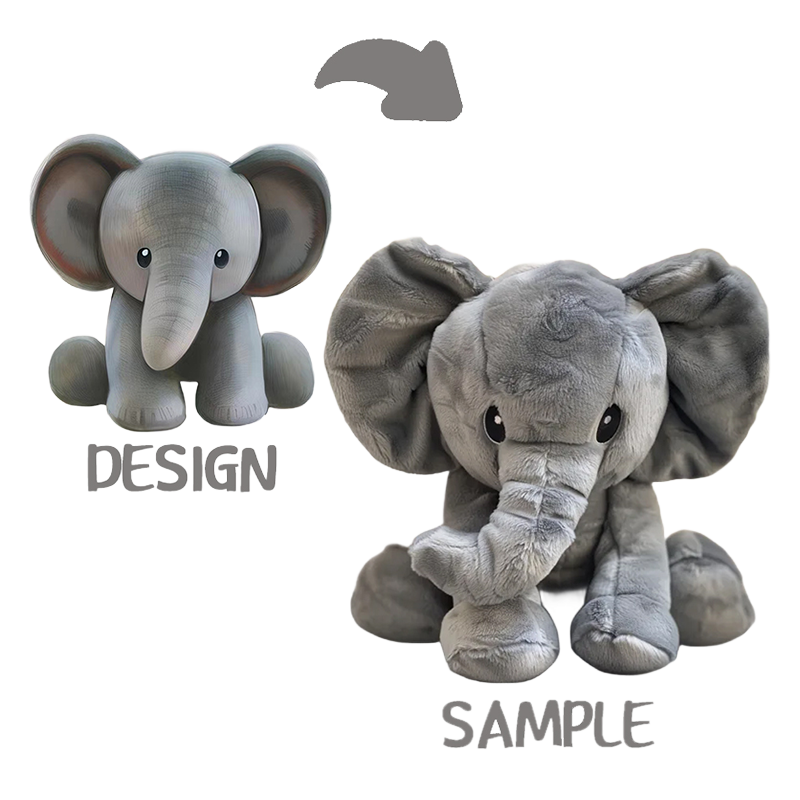
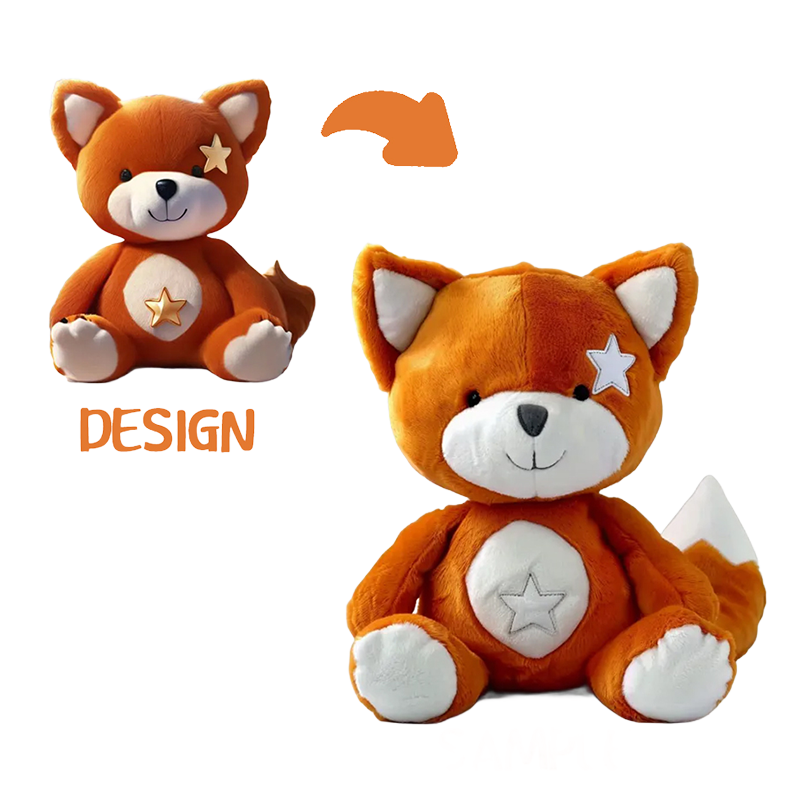
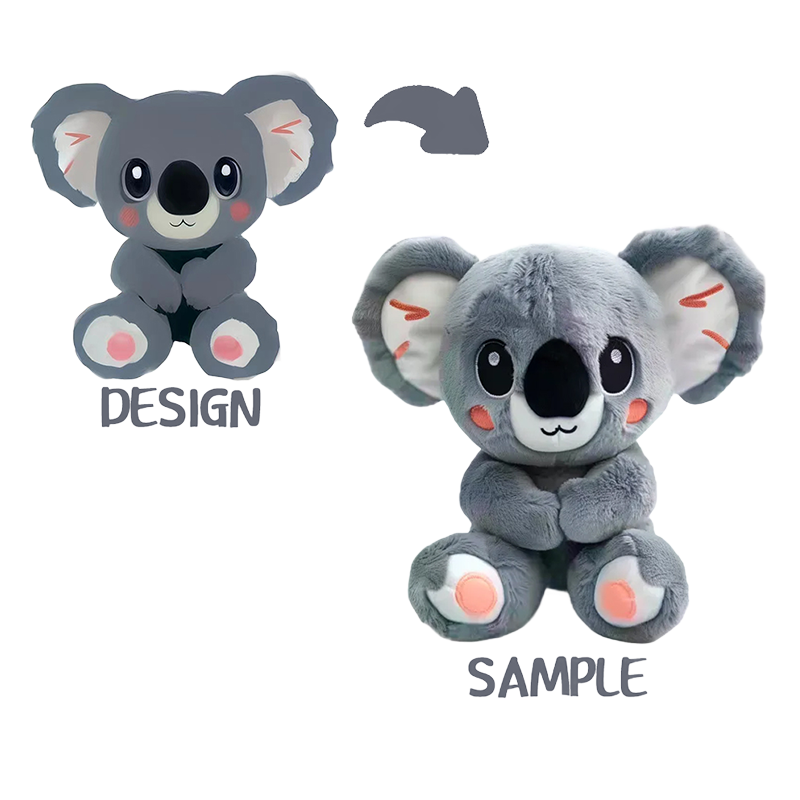
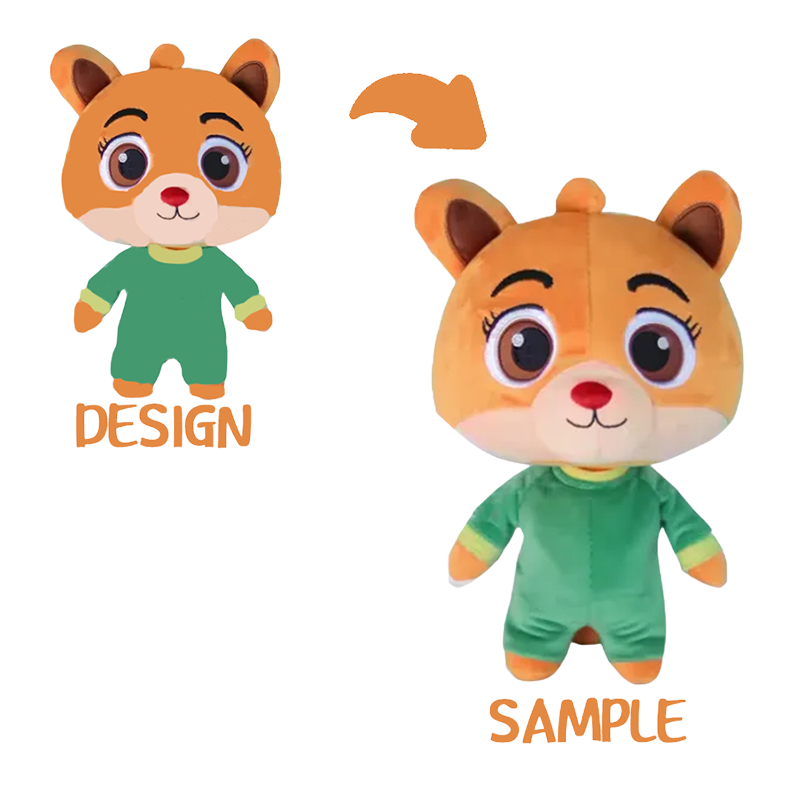
- 6 Step 5 — Turning Your Logo or Mascot Into a Plush Keychain Character
- 7 Quality Standards and Safety Certifications for Custom Plush Keychains
- 8 How to Order Wholesale Plush Keychains Effectively
- 9 About Kusibei: Custom Plush Keychain Manufacturing Partner
- 10 Frequently Asked Questions
Why Plush Keychains Work as Brand Merchandise
Plush keychains occupy a unique position in the branded merchandise landscape. Unlike flat printed items — stickers, tote bags, or lanyards — a stuffed animal keychain or plush animal keychain has three-dimensional form, soft texture, and often a distinct character identity. These properties activate emotional responses that flat merchandise simply cannot replicate.
Research on promotional merchandise retention consistently shows that soft, tactile items are kept significantly longer than paper or rigid promotional products. A survey by the Promotional Products Association International (PPAI) found that plush and soft goods are retained on average 14 months — nearly double the retention rate of printed flat items. For a keychain worn daily, that translates into hundreds of brand impressions per unit over its lifetime.
The keychain format also delivers inherent mobility. Keys travel with their owner to work, shopping, restaurants, and social settings — each location is a new impression opportunity. A cute animal keychain or mini plush keychain attached to a bag or backpack generates organic brand visibility that paid media cannot easily replicate.
Figure 1: Plush and soft goods lead all major promotional product categories in average retention period at 14 months. This data reflects the tactile and emotional value that soft goods carry compared to flat or rigid alternatives. For brands investing in merchandise with long-term impression value, plush keychains represent one of the highest-retention formats available at their typical unit volume.
Step 1 — Define Your Design Concept Precisely Before Contacting a Manufacturer
The single most common source of delays, revision costs, and disappointing results in custom plush keychain production is an under-specified design brief. Manufacturers can execute almost any concept — but they cannot guess at details that are not provided. Before contacting a plush keychain manufacturer, prepare a complete design package.
What a Complete Design Brief Includes
- Character or logo reference: High-resolution artwork (300 dpi minimum), front and back views if the character has a distinct rear design, and any color codes (Pantone or CMYK values) for brand-critical colors.
- Size specification: The finished dimensions of the plush body in millimeters or centimeters, measured at the widest point and total height. For most mini plush keychains, this falls in the 6–12 cm range; larger soft toy keychains run 12–20 cm.
- Hardware specification: Key ring type (split ring, lobster clasp, or swivel hook), ring diameter, and chain material (nickel, brass, or zinc alloy) and length if a chain is included.
- Feature details: Whether the design includes embroidered details, printed elements, hang tags, packaging, or safety eyes versus stitched eyes (important for children's products).
- Target market and certifications: If the keychain will be sold in the EU, US, or Canada, state applicable standards (EN71, ASTM F963, CPSIA) upfront so the manufacturer can plan material and testing requirements.
Brands that submit complete design briefs typically receive an accurate prototype within 10–15 business days. Brands that start with verbal descriptions or low-resolution references often go through three to five revision rounds — adding 4–8 weeks to the project timeline and substantially increasing sampling costs.
Step 2 — Select the Right Materials for Your Plush Keychain
Material choice affects the visual appeal, tactile experience, durability, and compliance profile of your custom stuffed animal keychain. There is no universal best material — the right choice depends on your target user, intended use environment, and certification requirements.
| Fabric Type | Pile Length | Texture Feel | Detail Clarity | Best For |
|---|---|---|---|---|
| Short-pile Minky | 1–2 mm | Smooth, velvety | Excellent | Logo characters, fine detail designs |
| Medium-pile Plush | 5–8 mm | Soft, fluffy | Good | Plush animal keychains, mascots |
| Long-pile Sherpa | 12–20 mm | Very soft, cloud-like | Moderate | Novelty, premium gifting |
| Velboa | 2–3 mm | Smooth, slightly stretchy | Very good | Vibrant color printing, flat panels |
| Organic Cotton Plush | 3–5 mm | Natural, matte | Good | Eco-branded merchandise, infant-safe items |
For most branded plush keychains targeting adult consumers, short-pile Minky or medium-pile plush strikes the best balance between detail reproduction and soft-toy feel. When the design involves a custom mascot keychain with fine facial features, embroidered lettering, or subtle color gradients, shorter pile fabric allows the embroidery and surface details to read clearly without being obscured by fiber texture.
Filling material is equally important. PP cotton fill (polyester fiberfill) is standard in most production — it is lightweight, resilient, and hypoallergenic. For premium products, memory foam fill creates a distinct tactile weight and resistance that communicates quality. Organic cotton fill satisfies sustainability-focused brand requirements.
Step 3 — Determine the Ideal Size for Your Application
Size is one of the most consequential decisions in custom plush keychain design, yet it is frequently under-considered until the sample arrives. The right size depends on the use case, the level of design detail, and the attachment point where the keychain will be used.
As a practical benchmark: keychains in the 6–9 cm range are the most universally functional — small enough to hang cleanly from a standard key ring or bag zipper without becoming obstructive, large enough to carry visible design detail. Keychains above 12 cm begin to feel more like bag charms than functional keychains, which can be a positive or negative depending on positioning. Below 5 cm, embroidered facial features become difficult to render legibly at standard thread counts.
Figure 2: The 6–9 cm size range accounts for 45% of all custom plush keychain orders, reflecting its optimal balance of wearability, design visibility, and production cost. Brands producing corporate gifting items or event giveaways heavily favor this range. The 10–12 cm segment captures 28% of orders, often used by brands seeking a more premium bag charm format with additional room for detailed character design. Sizes below 5 cm are primarily used for novelty vending or high-volume promotional applications where per-unit cost is the dominant constraint.
Step 4 — Understand the Custom Plush Keychain Production Process
Understanding what happens between your approved design and the finished product gives you realistic expectations about timelines, minimum order quantities, and where quality issues can emerge. A professional plush keychain manufacturer follows a defined production sequence.
- Pattern engineering: Your 2D artwork is converted into a 3D pattern by a technical designer who creates individual fabric panels for each body section. This step determines how accurately the finished plush reproduces the intended character shape.
- Prototype (pre-production sample): A hand-made sample is constructed using the engineered pattern and proposed materials. This sample is reviewed for shape accuracy, color match, proportion, and hardware placement before mass production is authorized.
- Revision and approval: Feedback is incorporated and a revised sample produced until the client provides written approval. Most projects require one to three revision rounds.
- Material sourcing and cutting: Approved fabric and fill materials are sourced in production quantities. Automated die-cutting or digital cutting machines cut the fabric panels to consistent shape and size.
- Embroidery: Facial features, logos, and detail elements are embroidered onto individual panels before assembly using multi-head embroidery machines. Color-matching thread to Pantone references is completed at this stage.
- Sewing and stuffing: Panels are sewn together by skilled operators, leaving a small opening for stuffing. PP cotton or alternative fill is inserted and the opening closed by hand. Hardware attachment point is reinforced at this stage.
- Hardware attachment: The key ring, chain, and clasp assembly is attached through a fabric loop or stitched gusset at the top of the plush. Hardware pull tests are conducted to verify attachment strength meets applicable safety standards.
- Quality inspection and packaging: Finished keychains are inspected for shape consistency, thread quality, color accuracy, and hardware security. Packaging — hang tags, poly bags, or custom boxes — is applied before final packing for shipment.
Figure 3: The standard custom plush keychain production timeline spans approximately 55–65 days from design brief submission to shipment, assuming one to two sample revision rounds. The longest single phase is mass production (typically 20 days), during which the manufacturer is producing and quality-checking the full order quantity. Brands planning for seasonal events, trade shows, or product launches should factor in this lead time plus shipping transit — commonly an additional 15–30 days for ocean freight to the USA, UK, or Canada.
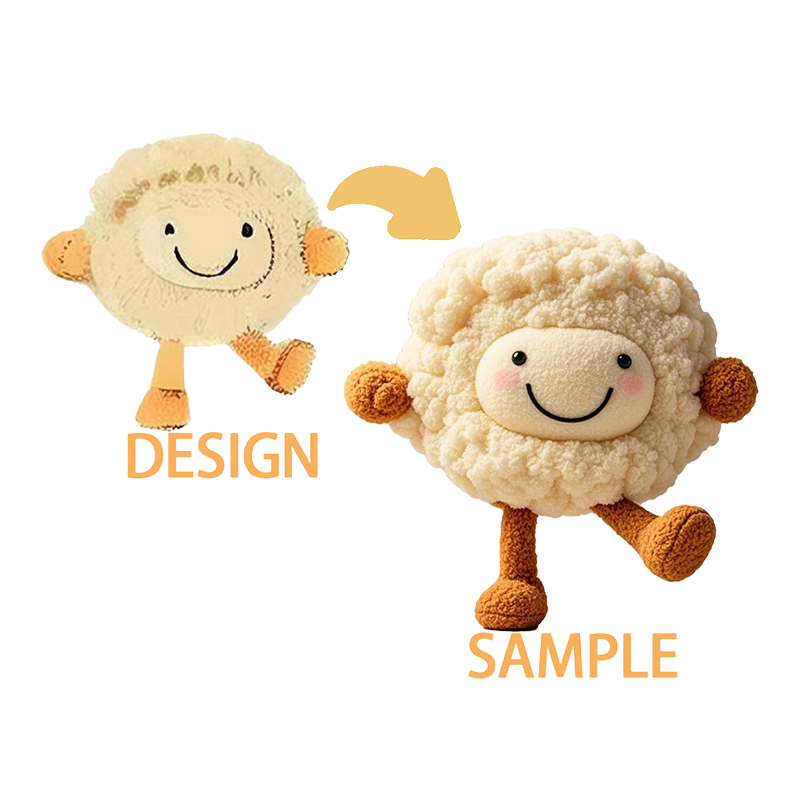
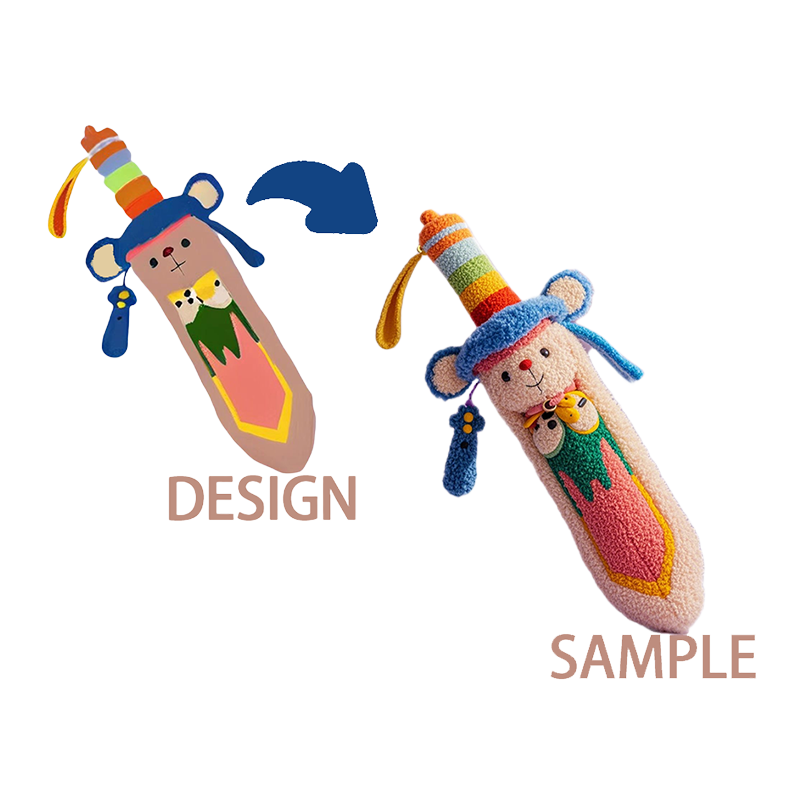
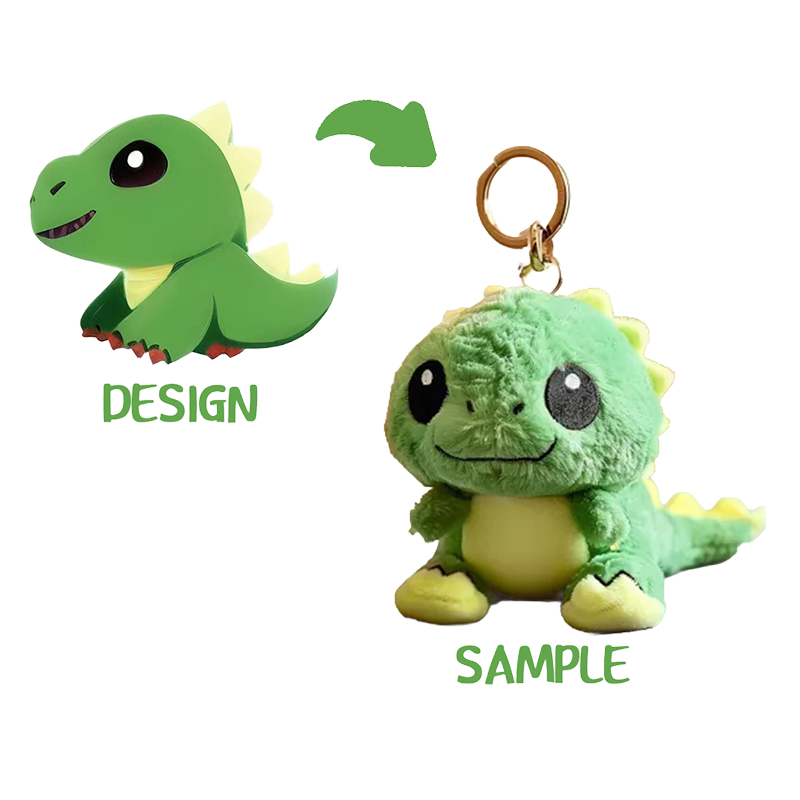
Step 5 — Turning Your Logo or Mascot Into a Plush Keychain Character
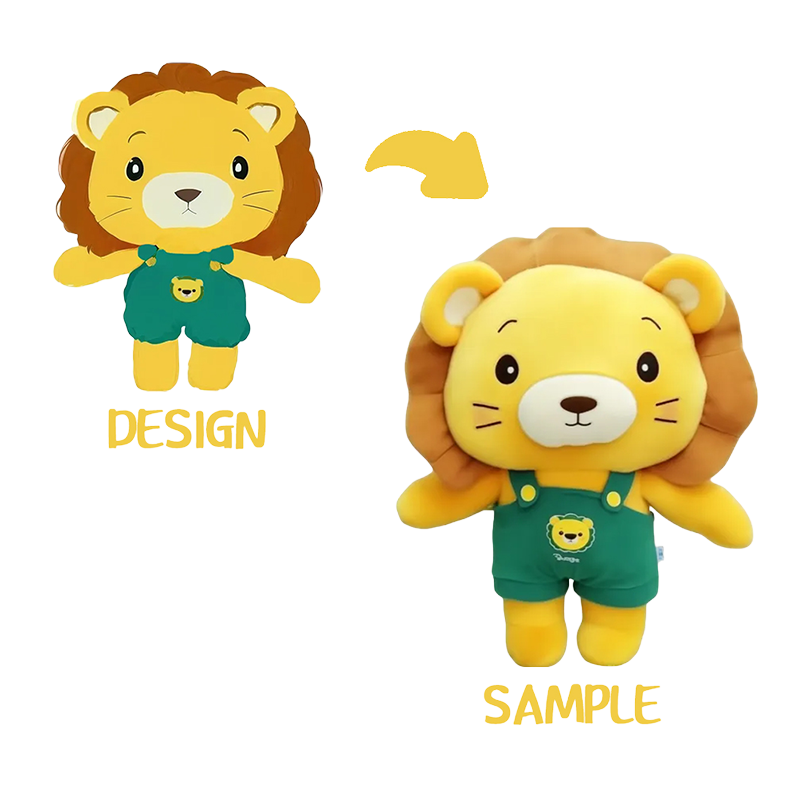
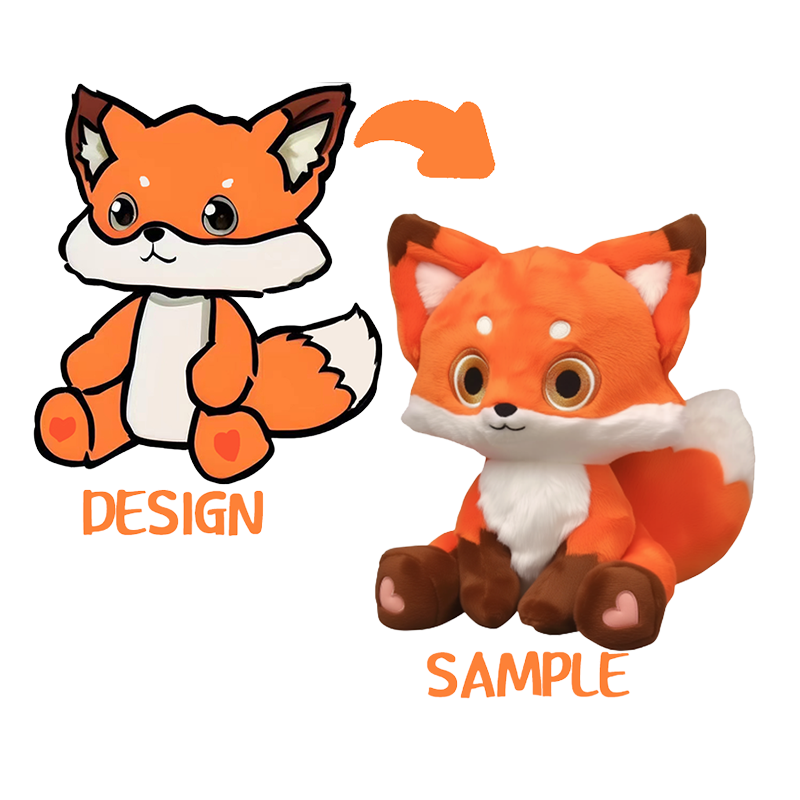
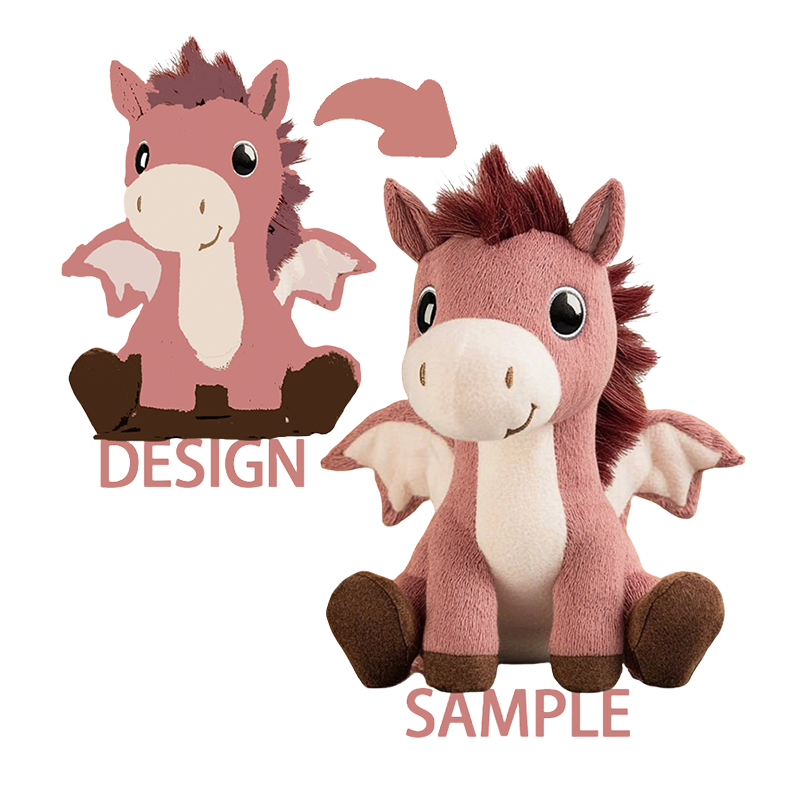
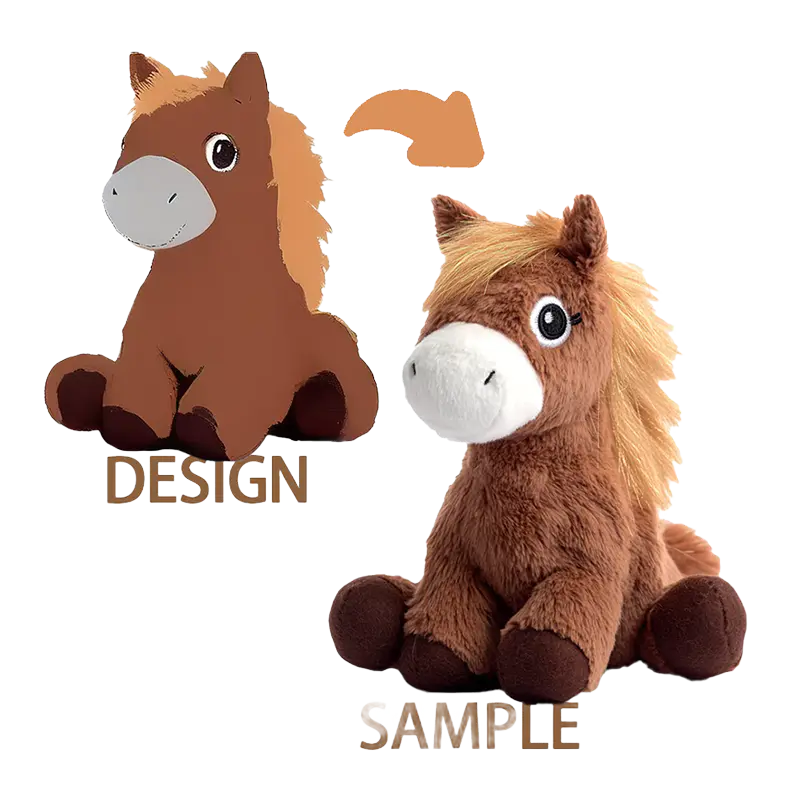
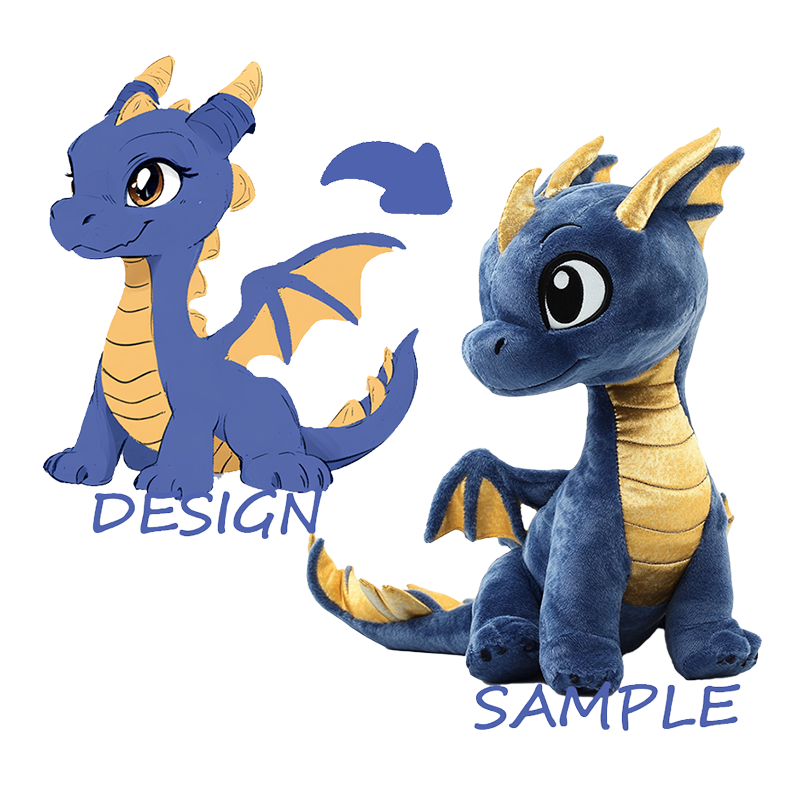
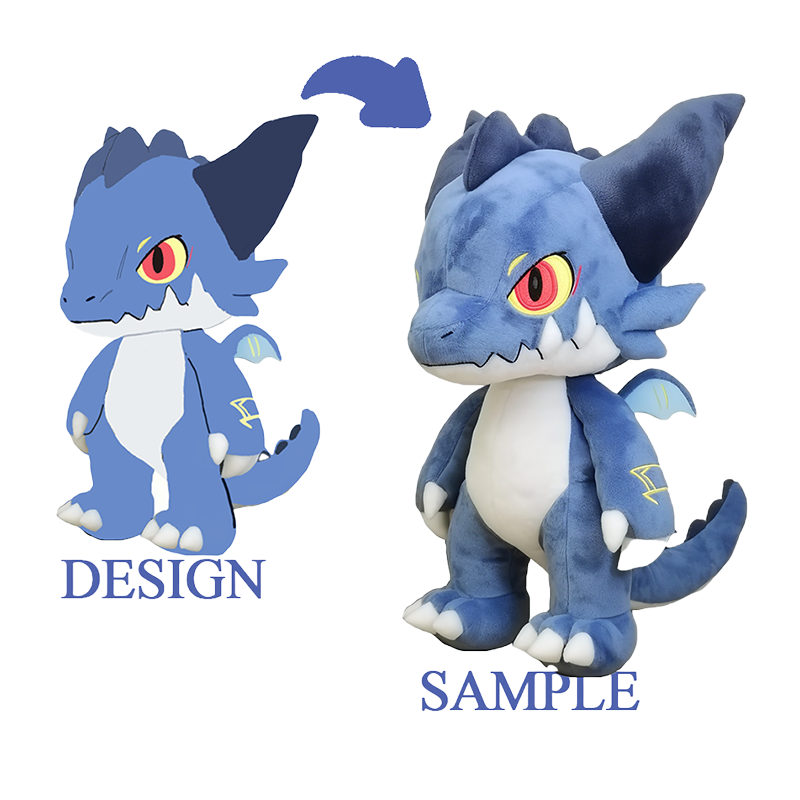
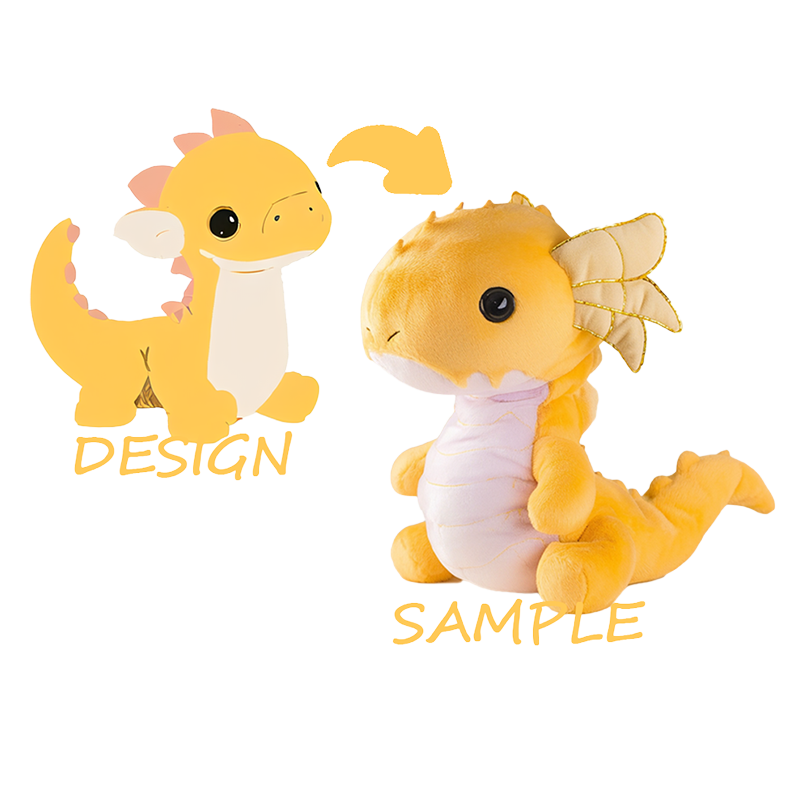
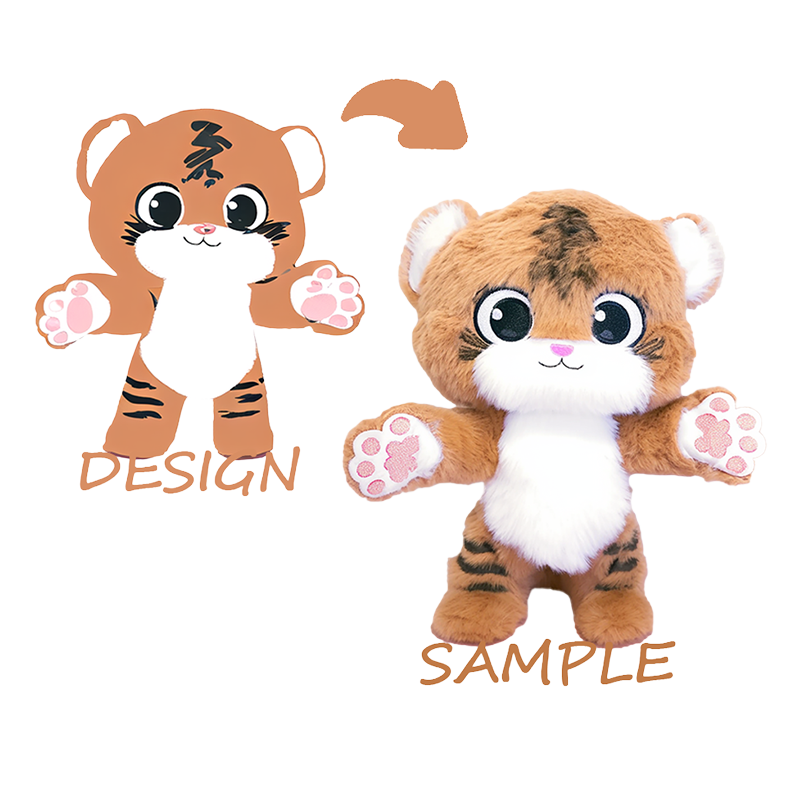
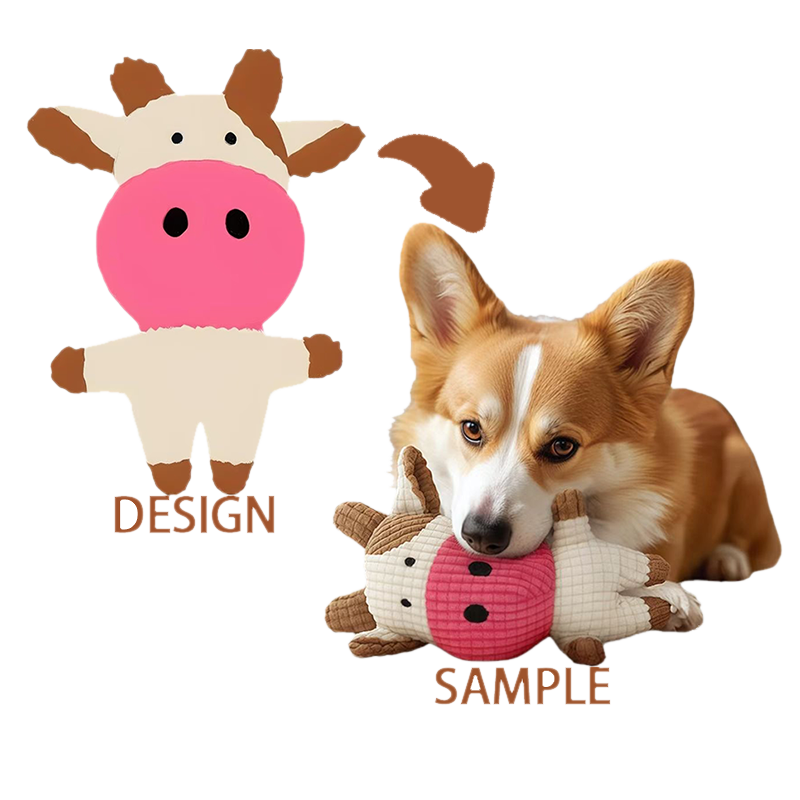
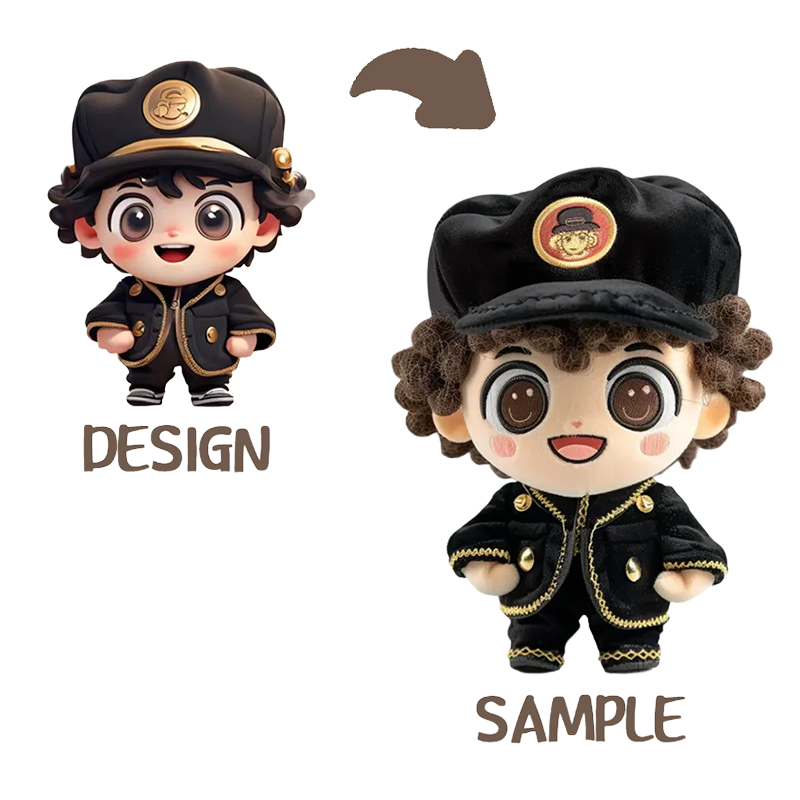
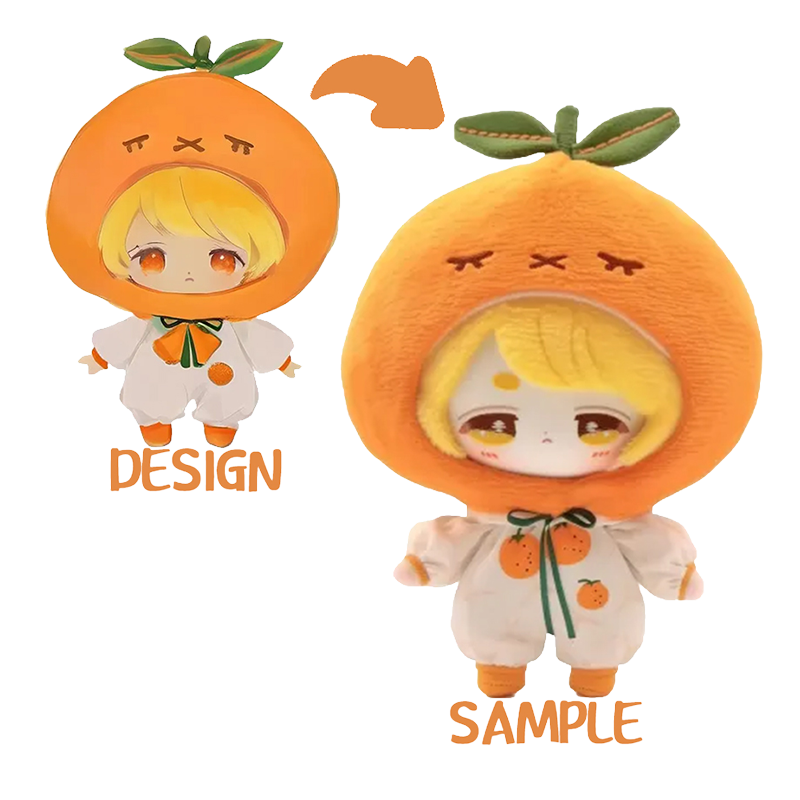
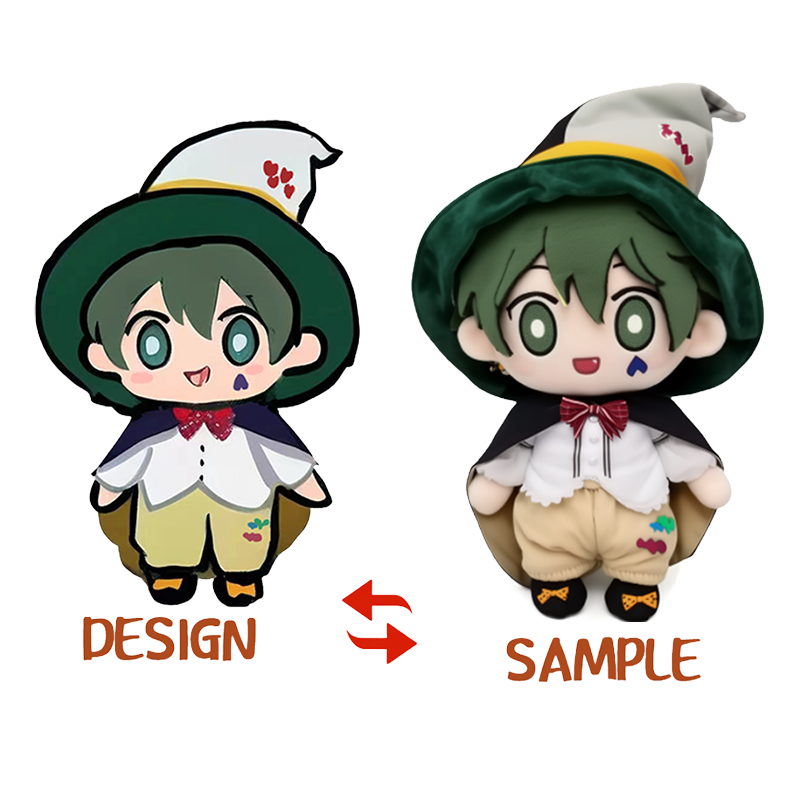
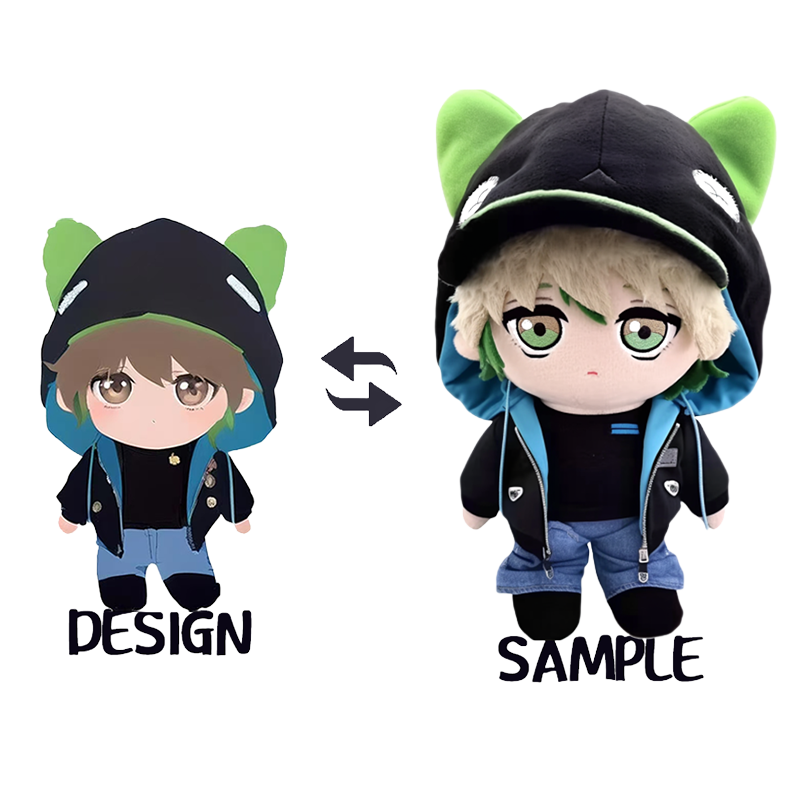
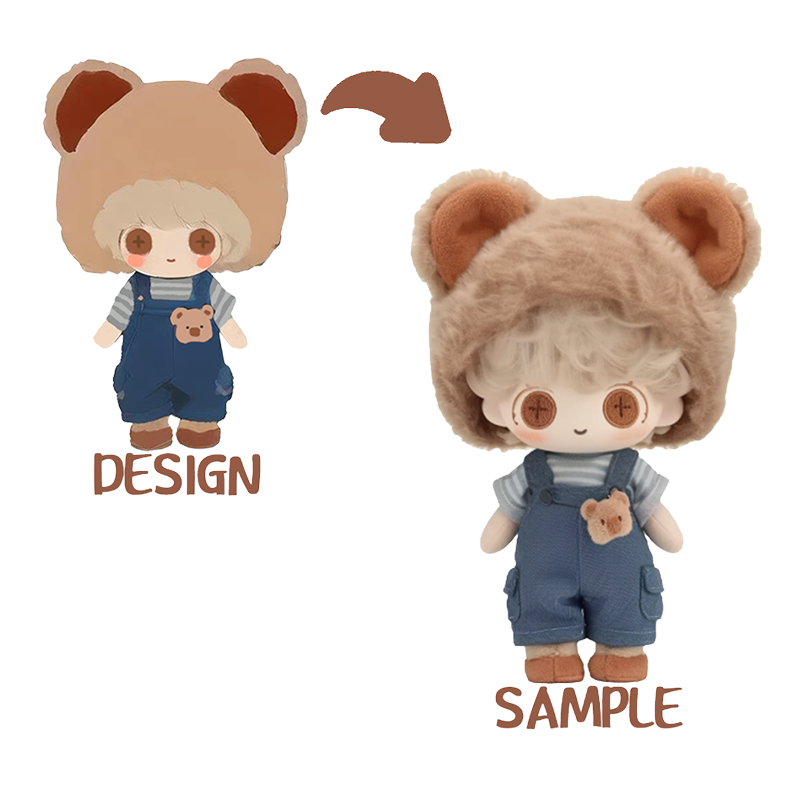
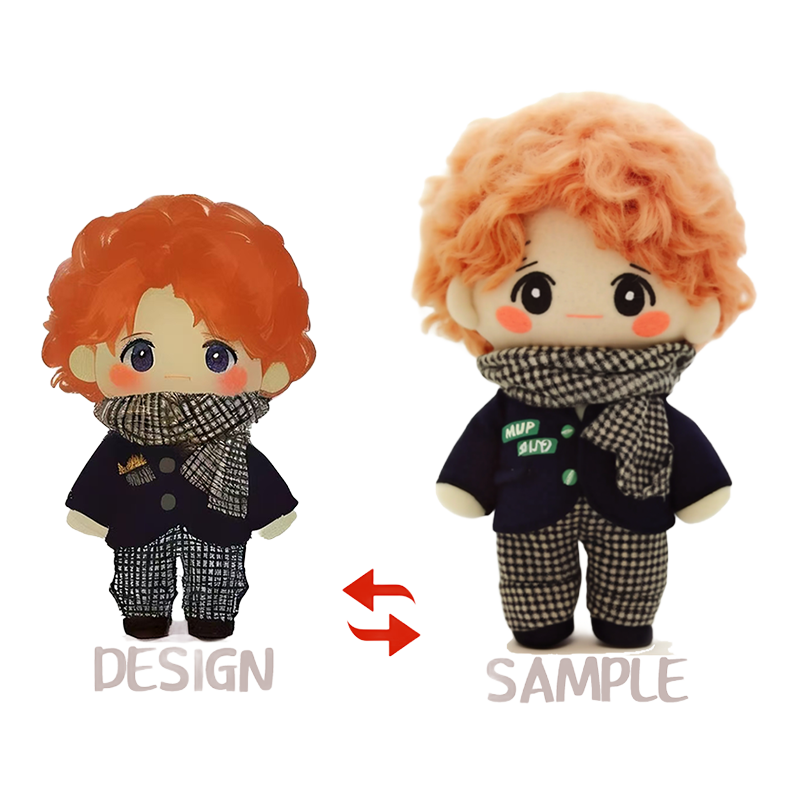
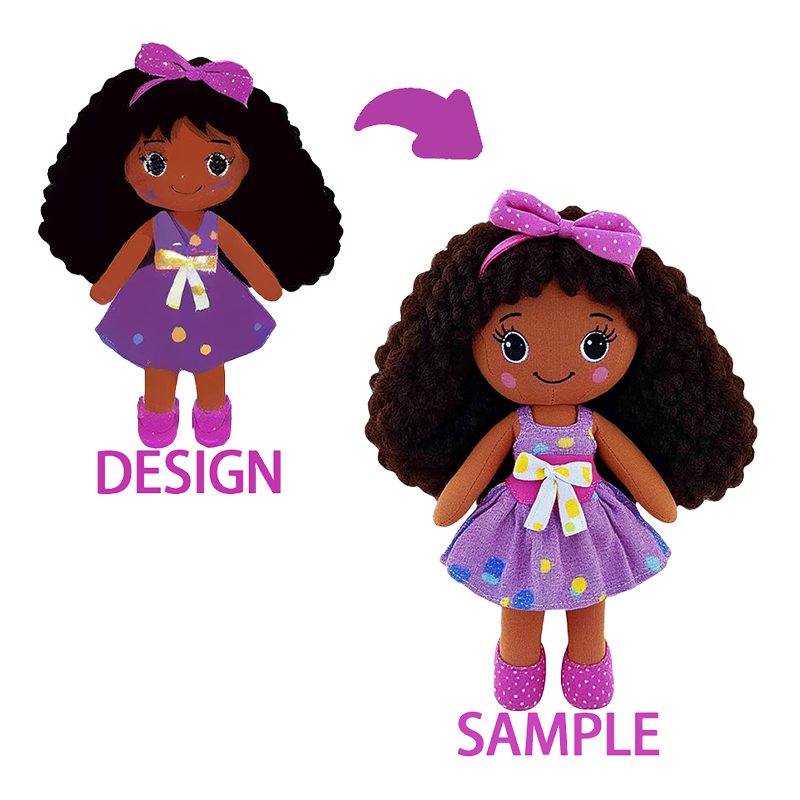
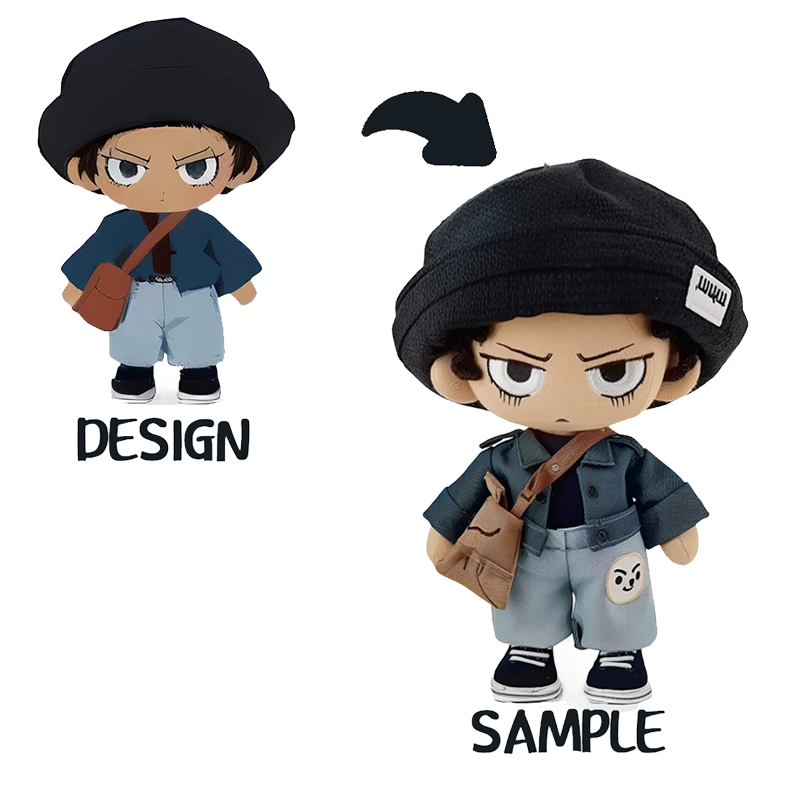
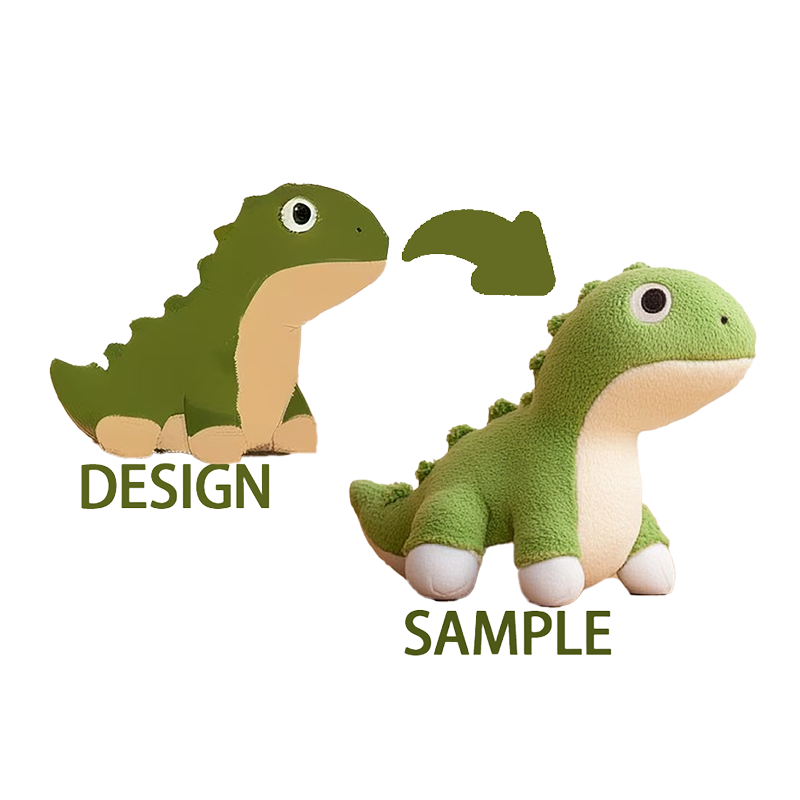
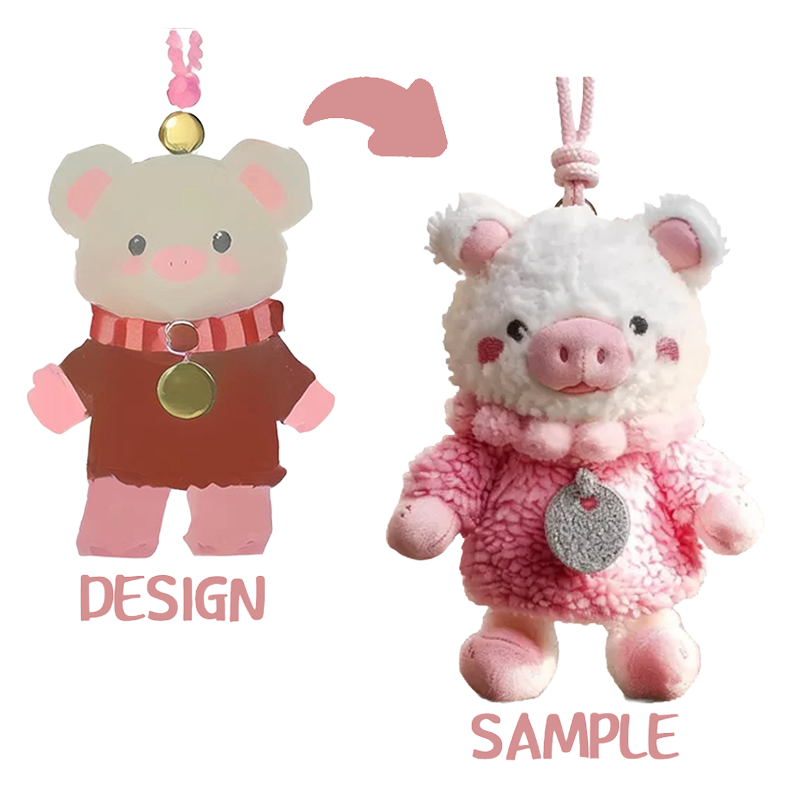
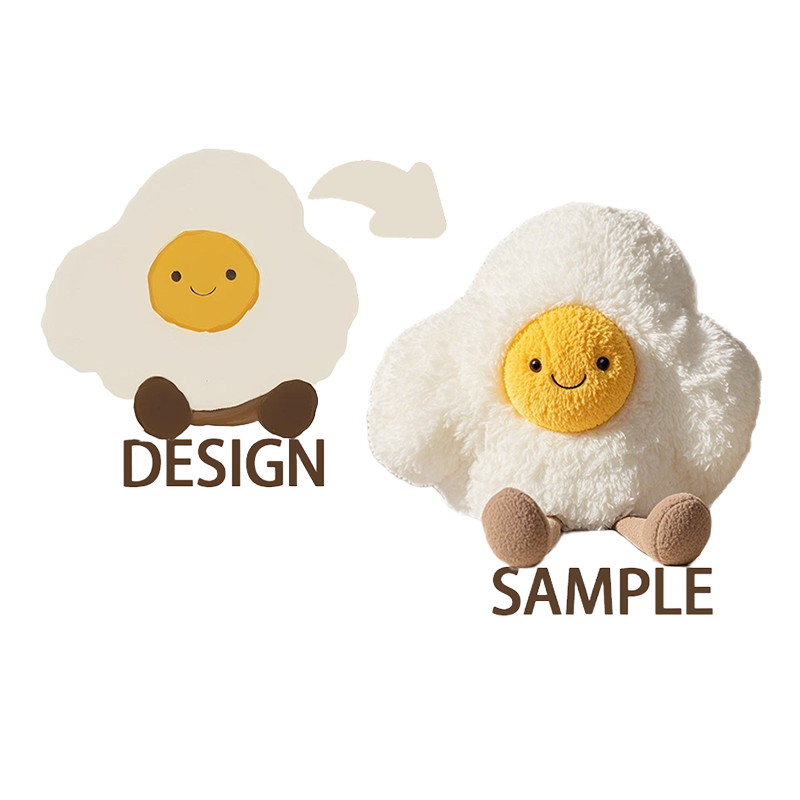
Converting a 2D logo or brand mascot into a three-dimensional custom mascot keychain requires thoughtful interpretation, not literal translation. Flat graphic designs contain elements — thin lines, gradients, complex typography — that do not translate into fabric construction at keychain scale. A skilled plush designer will work with your team to adapt the mascot for the medium while preserving the essential recognition cues.
Key Adaptation Principles
- Simplify line work: Details below 3 mm in the finished piece cannot be reproduced in embroidery at standard thread thickness. Replace thin outlines with color blocking and strategic use of contrasting fabric sections.
- Exaggerate proportions deliberately: Successful plush characters typically have proportions that differ from their 2D counterparts — larger heads relative to body, simplified limbs, and amplified facial features. This is not a failure of reproduction; it is the correct adaptation for a 3D soft-toy format.
- Prioritize facial identity: The face is the primary recognition zone of any character plush. Ensure that eye shape, mouth expression, and any distinctive facial features receive the most detail attention in the production pattern.
- Use fabric color sections for body color: Where the 2D design uses solid color areas, use corresponding fabric panels cut from the appropriate fabric color. This produces cleaner, more durable color separation than surface printing.
At Kusibei, this adaptation process is handled by an experienced in-house design team before pattern engineering begins, ensuring that brand equity is protected throughout the translation from 2D artwork to finished custom plush keychain.
Quality Standards and Safety Certifications for Custom Plush Keychains
Quality in a stuffed animal keychain is not a single dimension — it encompasses material safety, construction durability, color fastness, and hardware security. For brands distributing in regulated markets, meeting applicable safety standards is not optional; it is a baseline requirement for market access.
| Standard | Market | Scope | Required For |
|---|---|---|---|
| EN71 Parts 1–3 | European Union | Mechanical safety, flammability, chemical migration | CE marking; toys / items for under-14 use |
| ASTM F963 | United States | Toy safety, mechanical hazards, stuffing material | CPSC compliance; items marketed to children |
| CPSIA | United States | Lead content, phthalates in children's products | All children's products sold in the USA |
| REACH / OEKO-TEX | EU / Global | Chemical substances in textiles and accessories | Fabric and filling material compliance |
| ISO 6941 / BS 5852 | UK / EU | Textile flammability | Post-Brexit UK market requirements |
For custom plush keychains marketed specifically to adults — as branded merchandise, corporate gifts, or collector items — the safety certification requirements are typically less extensive than for children's toy products. However, hardware pull strength testing should always be performed regardless of target age group, as a keychain that sheds its ring or chain in use creates both a brand reputation issue and a potential hazard.
Figure 4: The radar chart compares three quality tiers of custom plush keychain production across six key dimensions. Premium production outperforms economy and standard tiers in all dimensions, particularly in color accuracy (critical for branded merchandise) and hardware durability (a primary customer complaint driver for keychains). For branded merchandise where the keychain represents the brand in the field, standard or premium production is strongly recommended — economy-tier production typically leads to visible quality degradation after 3–6 months of daily use.
How to Order Wholesale Plush Keychains Effectively
Ordering wholesale plush keychains is a different process from retail purchasing, and understanding the levers that affect order success is important whether you are buying 500 units for an event or 50,000 units for a retail program.
Minimum Order Quantities
Most plush keychain manufacturers set minimum order quantities (MOQs) in the range of 100–500 pieces per design for standard configurations. Custom designs with unique patterns, special materials, or unique hardware typically have higher MOQs — often 300–500 pieces minimum — because setup costs (pattern engineering, sample production, machine setup) are amortized across the order quantity. For very low-volume initial runs (under 100 pieces), expect higher per-unit sampling costs and longer lead times.
Packaging Options for Brand Impact
Packaging is an often-neglected touchpoint for branded plush keychains. Options range from simple OPP poly bags (functional, low-cost) to printed hang tags on kraft card stock (adds perceived value significantly), to full custom-printed header cards or gift boxes. For gifting or retail applications, investing in packaging that matches your brand identity amplifies the perceived quality of the plush itself.
Figure 5: Consumer perceived value scores for identical plush keychains increase substantially with packaging investment. The largest single jump occurs between "OPP Poly Bag" and "Printed Hang Tag" packaging — a relatively small cost increment that raises perceived value by more than 1.5 points on a 10-point scale. This data highlights that packaging should be considered an integral part of the brand merchandise investment rather than an afterthought. For brands distributing at retail or gifting events, the step up to custom header cards or gift boxes produces the most significant perceived quality uplift.
About Kusibei: Custom Plush Keychain Manufacturing Partner
Kusibei is a manufacturer specializing in plush toys and custom plush keychains, offering comprehensive end-to-end solutions — from design consultation and pattern engineering through mass production, quality assurance, and international logistics. Kusibei's production lines cover all aspects of plush manufacturing, incorporating advanced production technologies, systematic assembly line management, and comprehensive quality assurance policies to deliver top-tier customization services to clients worldwide.
Kusibei's client base is concentrated across more than ten countries, including the USA, UK, and Canada. The company's focus on superior product quality and exceptional customization capability has made it a trusted partner for brands seeking to transform unique design concepts into market-ready custom stuffed animal keychains, soft toy keychains, and branded plush keychains that earn lasting market recognition.
Frequently Asked Questions
Q1: What are plush keychains made of?
Plush keychains are made from a soft outer fabric — typically short-pile Minky, medium-pile polyester plush, Velboa, or organic cotton — filled with PP cotton (polyester fiberfill) or memory foam. Metal hardware components (split ring, lobster clasp, chain) are made from zinc alloy, brass, or nickel-plated steel. Surface details such as eyes, mouths, and logos are typically embroidered using polyester thread.
Q2: How do you choose a high-quality plush keychain?
Check five things: fabric pile consistency (no bald spots or uneven areas), seam strength (try pulling seams lightly — no thread should loosen), embroidery clarity (stitching should be dense and even without loose ends), hardware pull strength (ring attachment should resist at least 5 kg of pull force), and color fastness (colors should be saturated and consistent across the full batch, not faded or uneven).
Q3: What size plush keychain is best?
The 6–9 cm range is best for most applications — functional enough to use as an actual keychain, large enough to display design details clearly, and comfortable to carry daily. For bag charms or collectible designs where display visibility matters more than functional use, 10–14 cm allows for richer character detail. Sizes below 5 cm limit embroidery detail significantly and are best reserved for high-volume novelty applications.
Q4: Are plush keychains suitable for kids?
Plush keychains can be made suitable for children, but require specific safety provisions: stitched safety eyes (not plastic snap-in buttons) for children under 3, CE/EN71 or ASTM F963 certified materials, non-toxic dyes and stuffing, and reinforced hardware attachment that passes pull-force testing. Always specify the intended age group when ordering so the manufacturer can design accordingly and provide appropriate certification documentation.
Q5: How can I customize a plush keychain?
Customization options include: character shape (based on your logo, mascot, or original design), fabric color and type, embroidered or printed surface details, hardware color and style, size, fill material, and packaging. Provide high-resolution artwork with Pantone or CMYK color references, your target dimensions, and any certification requirements. A professional manufacturer will develop a 3D pattern and prototype for your approval before mass production.
Q6: What is the process of making custom plush keychains?
The process follows eight stages: design brief, pattern engineering, prototype sample, client approval and revisions, material sourcing and cutting, embroidery, sewing and stuffing, and final quality inspection with packaging. From design brief to shipment typically takes 55–65 days including one to two sample revision rounds. Allow additional time for ocean freight shipping — typically 15–30 days to major markets.
Q7: Can plush keychains be made from a logo or mascot?
Yes. Logos and brand mascots are among the most common sources for custom plush keychain designs. The manufacturer's design team will adapt your 2D artwork into a 3D plush pattern, simplifying fine line details and adjusting proportions for the soft-toy format while preserving the essential brand recognition elements. Provide high-resolution artwork and any brand color standards to ensure accurate reproduction.
Q8: What is the minimum order quantity for wholesale plush keychains?
Most manufacturers set MOQs of 100–500 pieces per design for standard configurations, with custom designs typically requiring 300–500 pieces minimum due to pattern and setup costs. For very small initial runs under 100 pieces, sampling costs per unit are higher and lead times may be longer. If you are testing a new design before committing to a larger run, discuss this with the manufacturer upfront — some offer low-MOQ sampling programs for first-time orders.
We specialize in the design and production of plush toys to provide customers with unique customized services